We have compiled a list of manufacturers, distributors, product information, reference prices, and rankings for Network formation materials.
ipros is IPROS GMS IPROS One of the largest technical database sites in Japan that collects information on.

Network formation materials - List of Manufacturers, Suppliers, Companies and Products | IPROS GMS

Network formation materials Product List

1~2 item / All 2 items

Displayed results

Cross-linked sodium hyaluronate gel - high-density three-dimensional cross-linked network forming material.

High-performance hyaluronic acid gel produced by long-term retention, precise shape support, and medical-grade cross-linking technology.

Crosslinked Sodium Hyaluronate Gel is a high-performance gel material that forms a uniform and stable three-dimensional network structure through a multiple crosslinking technique using BDDE. The degree of crosslinking is precisely controlled within the range of 6-8%, allowing for customization according to specific applications. The high-density crosslinked structure exhibits excellent viscoelasticity, prolonged in-body retention, and shape retention, with a durability expected to last from 6 to 18 months. The residual BDDE level is <1 μg/mL, and the endotoxin levels are strictly managed, ensuring quality that meets medical-grade safety requirements. A variety of grades are available, with viscoelasticity and particle size adjusted for different applications from superficial to deep layers, accommodating diverse formulation and research needs through designed layered characteristics. The superficial grade offers flexibility suitable for delicate linear areas, the mid-layer grade provides natural volume formation, and the deep-layer grade ensures support and stability necessary for three-dimensional shaping. This gel boasts high biocompatibility, excellent hydration capacity, and maintains a stable gel structure, fulfilling both functional and morphological roles. It is suitable for a wide range of applications, including medical aesthetics, viscoelastic supplementation, and anti-adhesion applications in minimally invasive fields.

  • Cosmetic materials and raw materials
  • Network formation materials

Added to bookmarks

Bookmarks list

Bookmark has been removed

Bookmarks list

You can't add any more bookmarks

By registering as a member, you can increase the number of bookmarks you can save and organize them with labels.

Free membership registration

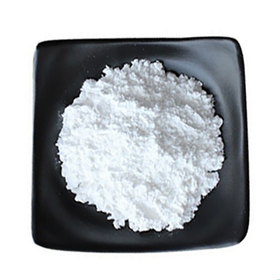
Cross-linked sodium hyaluronate powder - high-density three-dimensional cross-linked network forming material

Long-lasting retention, three-dimensional structure, and precise cross-linking technology. A high-performance cross-linked hyaluronic acid powder that enhances shape support and sustainability through a three-dimensional network.

Crosslinked Sodium Hyaluronate Powder is a high-performance hyaluronic acid crosslinked polymer raw material manufactured using a multi-crosslinking technology with BDDE. The degree of crosslinking is precisely controlled within the range of 6-8%, and customization according to application is also possible. The crosslinked structure forms a high-density three-dimensional network, demonstrating excellent shape retention, sustained moisturizing properties, and viscoelastic characteristics. This raw material is powdered through freeze-drying, which provides excellent stability for transportation and storage. When re-dissolved in saline or similar solutions as needed, it immediately reconstructs a uniform three-dimensional gel structure. Compared to regular non-crosslinked hyaluronic acid, it has higher viscoelasticity, making it easier to adjust gel strength and shape retention. The endotoxin level is extremely low at <0.005EU/mg, and the residual crosslinking agent is appropriately managed for high purity specifications. It can be designed into high viscoelastic gels, well-dispersed micro-crosslinked gels, and homogeneous single-phase gels, making it suitable for diverse product development and research applications. It is utilized in a wide range of fields, including viscoelastic design for beauty gels, material carriers, improving the physical properties of gel-based products, and as a forming material for three-dimensional structures.

  • Cosmetic materials and raw materials
  • Network formation materials

Added to bookmarks

Bookmarks list

Bookmark has been removed

Bookmarks list

You can't add any more bookmarks

By registering as a member, you can increase the number of bookmarks you can save and organize them with labels.

Free membership registration